What is the Reggio Emilia approach, and what does it look like day to day?
A simple guide to the Reggio Emilia approach to early learning, why the environment is called the third teacher, and what it looks like in practice.
Key takeaways
- Reggio Emilia sees children as capable, curious and full of ideas.
- Learning grows from children's own interests, often through long projects.
- The environment, with natural materials and light, is treated as a third teacher.
You may have seen the words Reggio Emilia when looking at early learning centres. The approach began in the town of Reggio Emilia in northern Italy after the Second World War, when families and educators wanted to build a new kind of education for young children. Today it inspires early childhood services around the world.
The big ideas
The capable child
Reggio Emilia sees children as strong, curious and capable of building their own understanding. Rather than filling children with facts, educators listen closely, ask questions and help children test their ideas.
The hundred languages of children
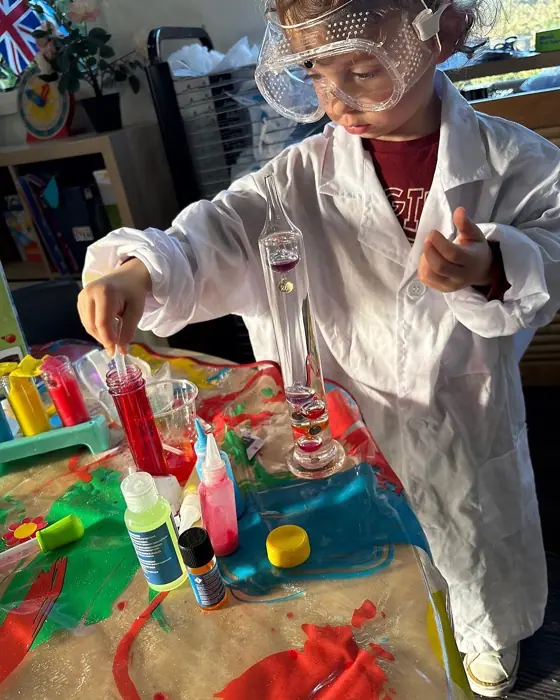
Children express what they know in many ways: drawing, building, painting, dance, music, clay, storytelling and play. Every one of these is valued as a real way of thinking.
The environment as the third teacher
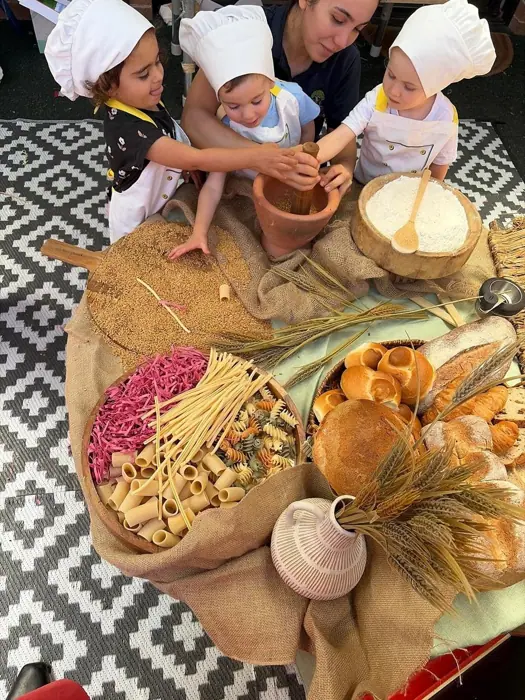
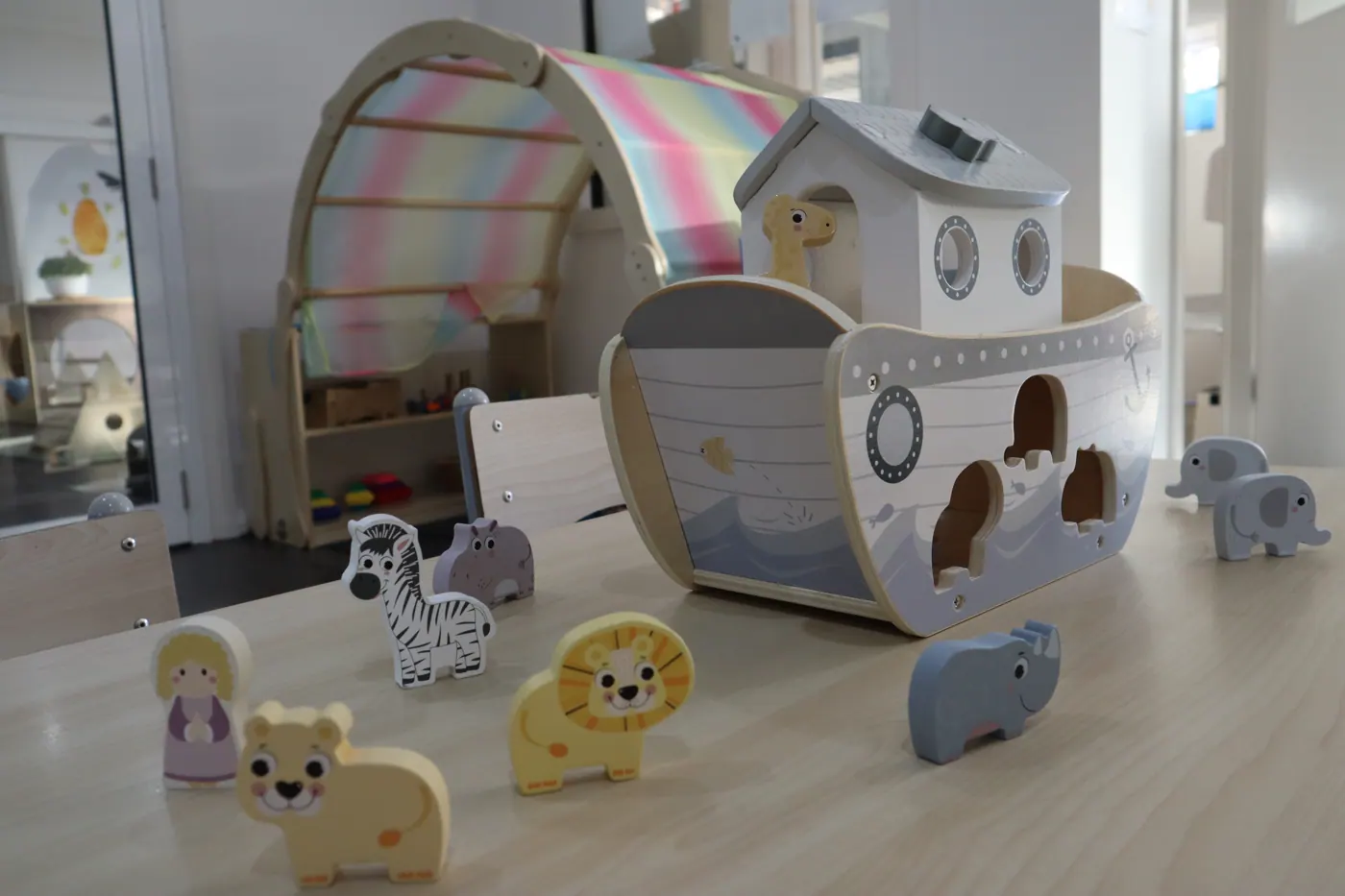
Alongside families and educators, the space itself teaches. Rooms are calm and full of natural light, with real materials such as wood, shells, leaves and fabric. Resources are arranged so children can reach them and make choices on their own.
Projects that follow interests
If a group of children becomes fascinated by snails in the garden, educators might help them observe, draw, research and build snail homes over several weeks. Learning goes deep because the children care about it.
Documentation
Educators record children's words, photos and artwork to make learning visible. This helps families see what their child is exploring and helps educators plan what comes next.
What it looks like at our centre
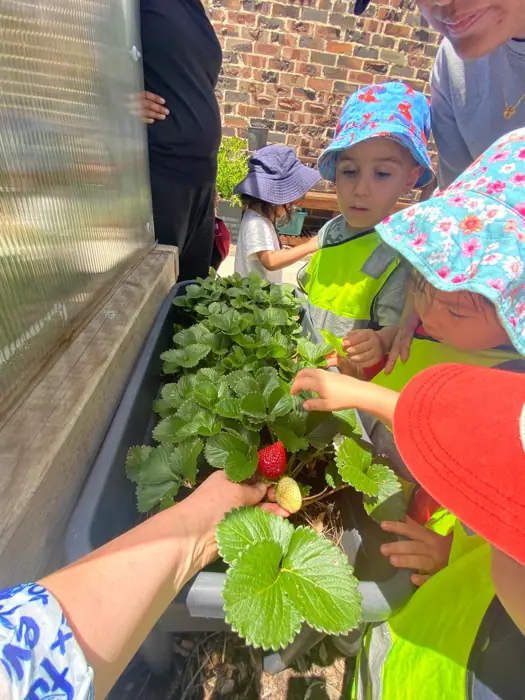
At Academy for Early Learners our rooms are set up with natural resources, open ended materials and inviting play spaces. A nature table might hold leaves, magnifying glasses and insects to examine. Our vegetable gardens and chickens spark long running projects about growing, food and caring for living things. Families receive learning stories and regular updates so they can follow their child's discoveries.
Is it right for my child?
Reggio inspired learning suits children who love to explore, and it gently supports children who are quieter or still building confidence. Because it follows each child's interests, it adapts to many different personalities.
Questions parents ask
Is Reggio Emilia the same as Montessori?
No. Both respect children as capable learners, but Montessori uses specific materials and a structured sequence, while Reggio Emilia is project based and follows children's interests with a strong focus on collaboration and documentation.
Does Reggio Emilia prepare children for school?
Yes. Long projects build language, early literacy and numeracy, problem solving and confidence, which are all important for starting school.
See it for yourself
Visit our West Pymble centre and meet the team.