
Beach Kindy: why we take learning to the water's edge
Our new Beach Kindy program takes children to the beach to paddle, dig, explore and care for nature. Here is what children learn, why beach play matters and how to keep the learning going at home.
Key takeaways
- Beach Kindy is our nature-based learning program by the water, the seaside sister of our Bush Kindy excursions.
- Beach play builds motor skills, sensory processing, early science and maths, language, confidence, teamwork and care for the environment.
- It links to all five outcomes of the Early Years Learning Framework.
- Safety comes first: risk assessments, family permission, hi-vis vests, hats and sunscreen, and educators beside children at the water's edge.
There is something magical about the moment a small child's toes touch the water for the first time. Their eyes go wide, they squeal, they step back, and then, almost always, they step forward again.
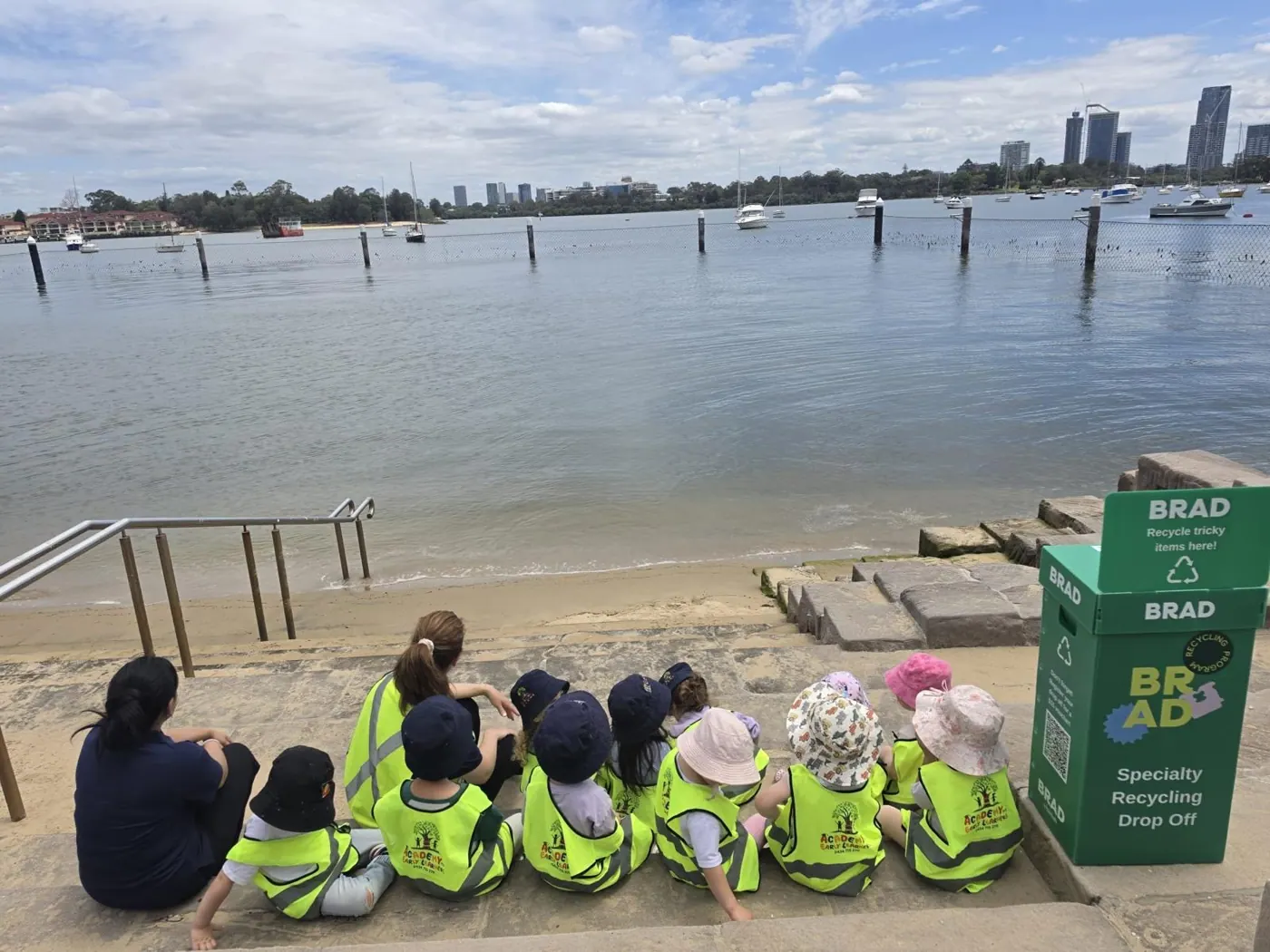
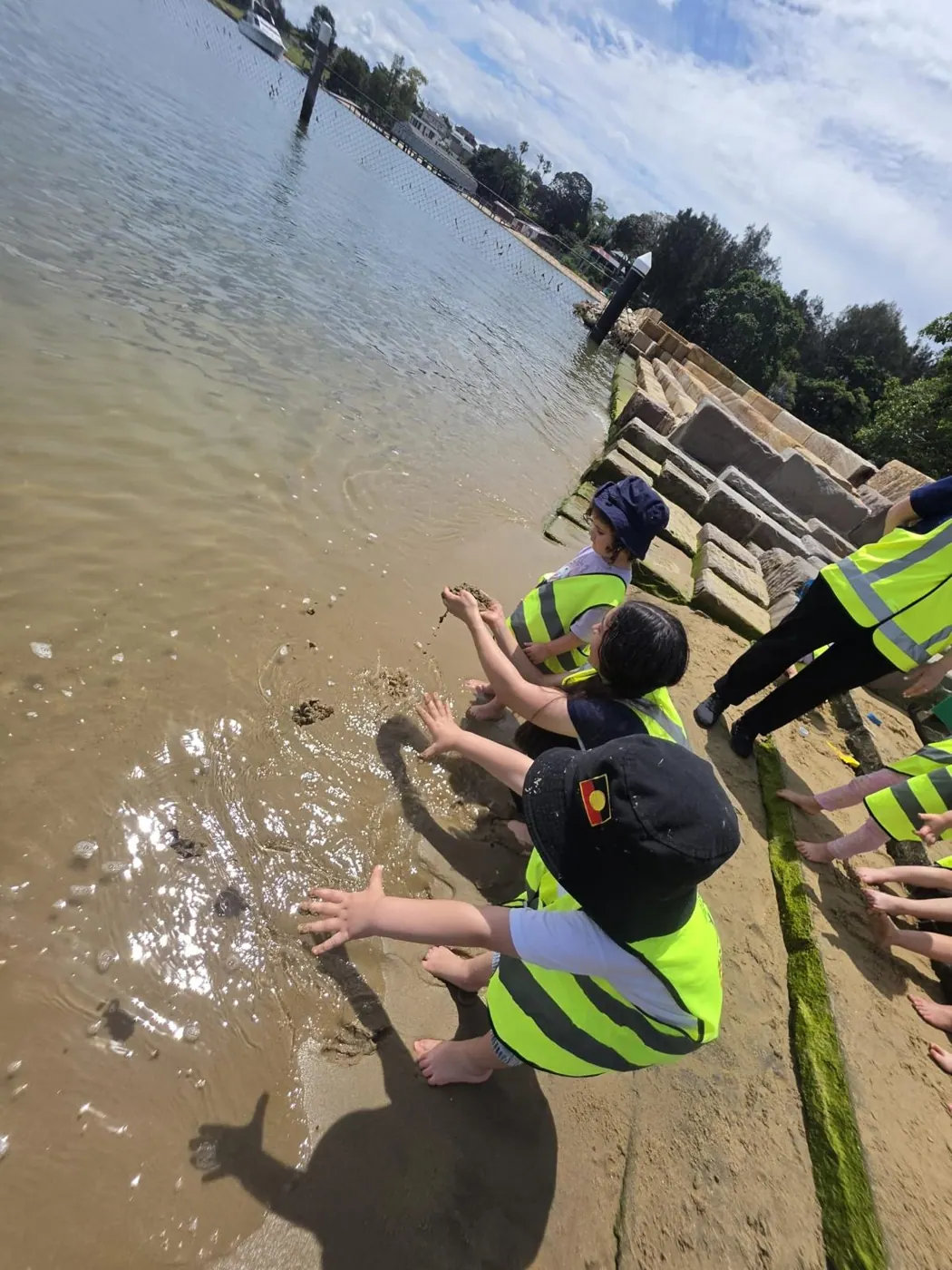
That moment is at the heart of Beach Kindy. Our children recently headed down to the beach in their bright hi-vis vests and Academy hats for a morning of paddling, digging and discovering, and it was one of the happiest days of the year. Here is what Beach Kindy is, what children learn there and why we believe the beach is one of the best classrooms there is.
What is Beach Kindy?
Beach Kindy is our nature-based learning program at the beach. Like our Bush Kindy excursions, it gives children time in a wild, open space where the "classroom" changes with the weather, the water and the light.
There are no worksheets and no plastic toys. Sand, shells, water, wind, boats and birds are the learning materials, and children's own curiosity leads the way. Educators guide, ask questions and keep everyone safe, but much of the teaching is done by the beach itself.
What happens on a Beach Kindy day
Every day is different, because children's interests lead the play. A morning by the water often looks like this:
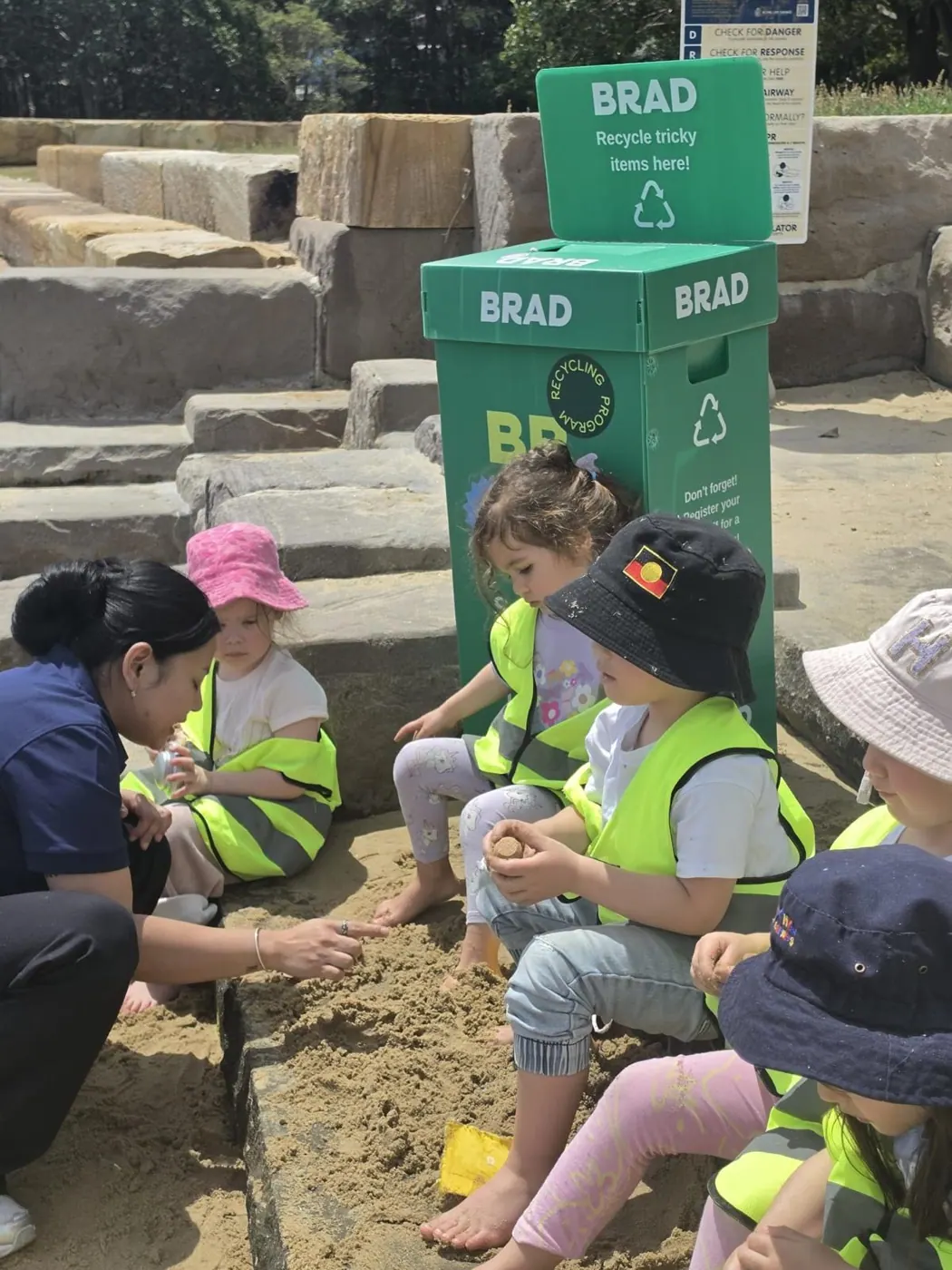
- Getting ready. Hats, sunscreen and hi-vis vests on, and a chat about our beach rules.
- Noticing. We sit on the sandstone steps and look and listen: boats bobbing, birds overhead, little waves on the shore.
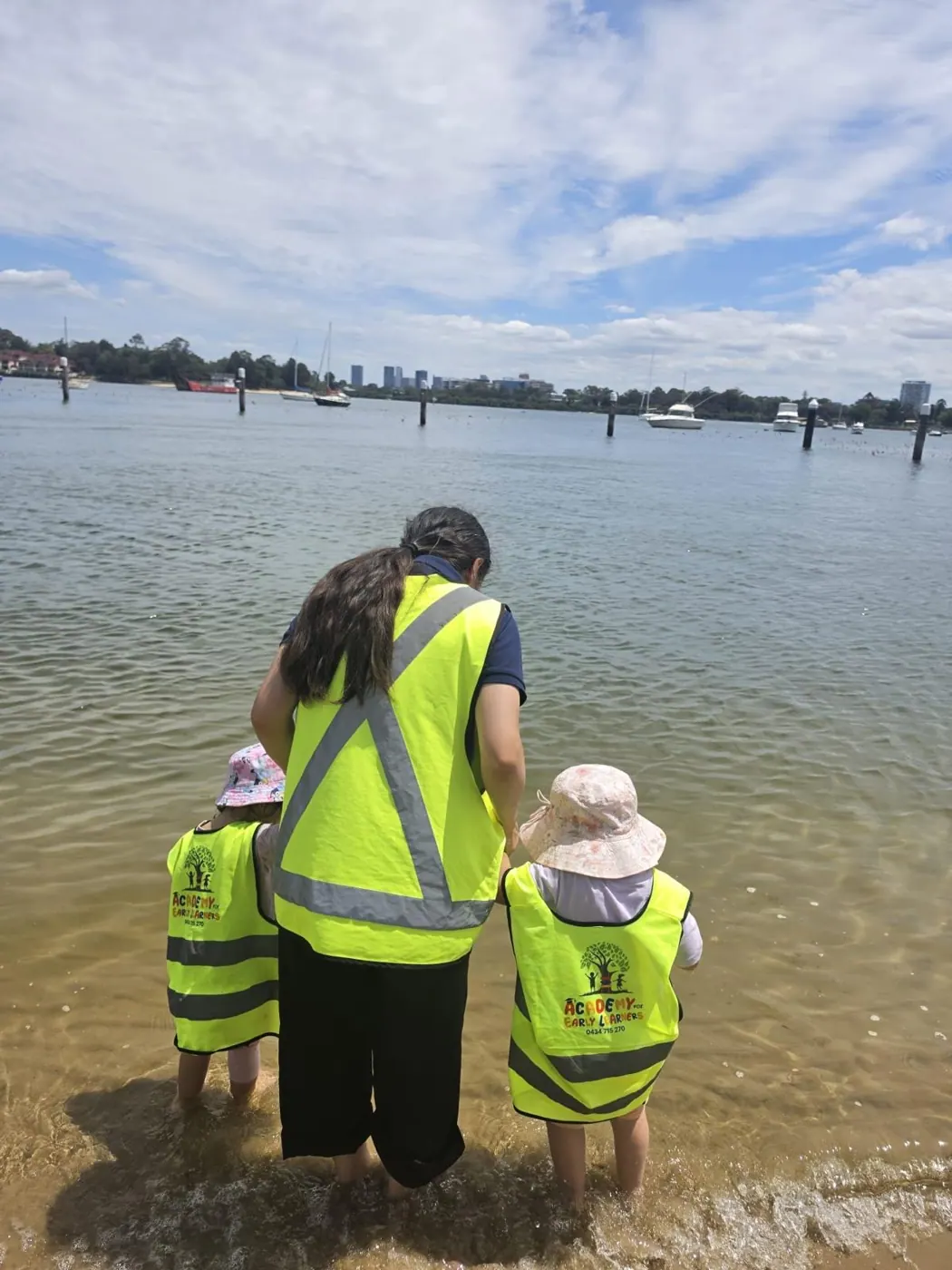
- Exploring the water's edge. With educators right beside them, children dip toes and hands into the shallows and watch the ripples spread.
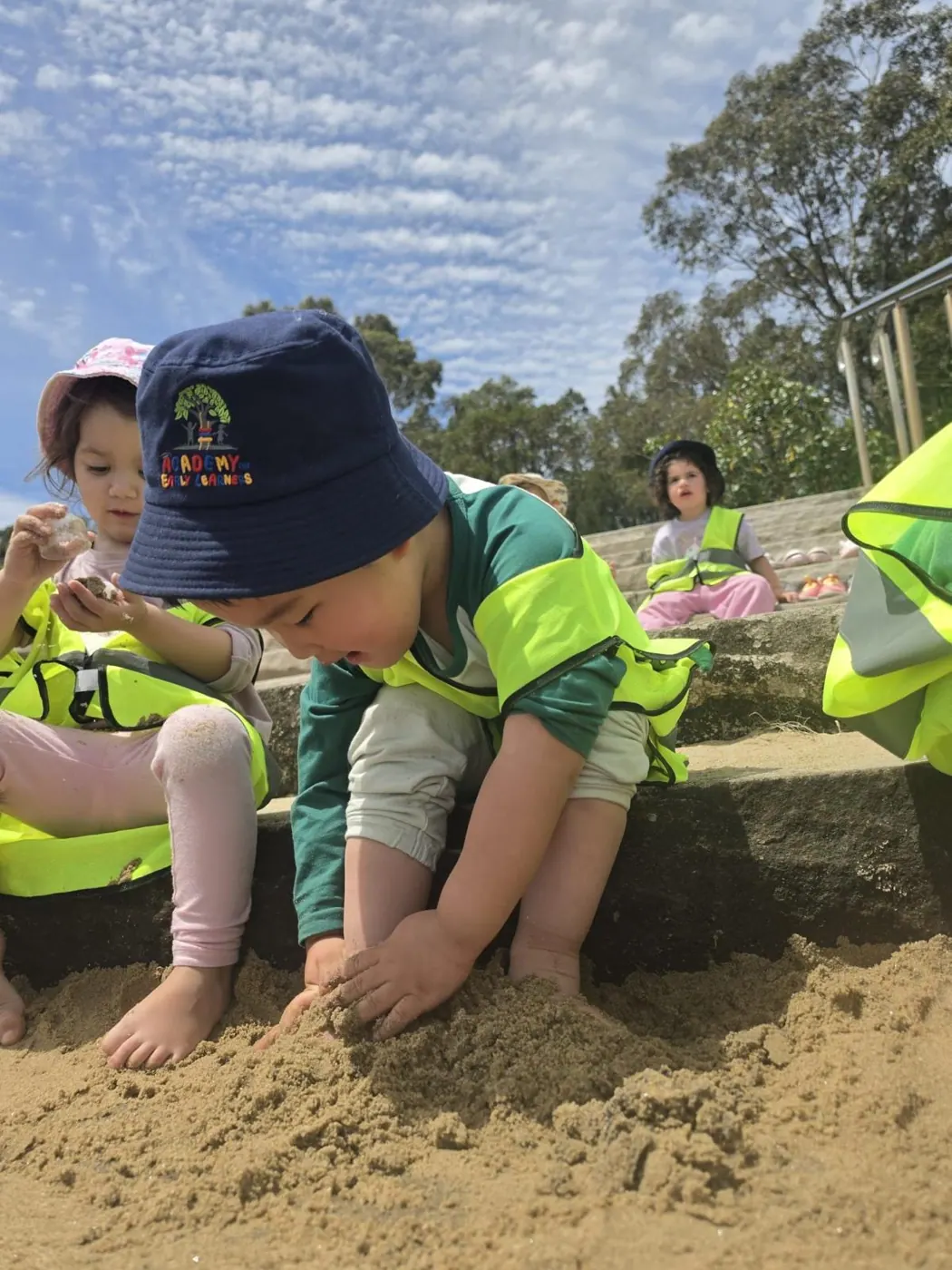
- Digging and building. Holes, mountains, rivers and shell collections appear everywhere.
- Caring for the beach. We talk about what belongs in the bin or the recycling and leave the beach as we found it.
- Sharing. Back at the centre, children retell their adventure through talk, drawings and play.
Why the beach is such a good classroom
1. Strong, coordinated bodies
Soft sand is hard work for little legs. Walking on it, climbing big steps and crouching to dig builds balance, core strength and coordination far beyond what a flat floor offers. Scooping, pouring and picking up tiny shells also strengthens the small muscles in the hands that children will later use to hold a pencil and do up buttons.
2. Rich sensory learning
Cool water, warm sand, wind on the face, the sound of waves and the smell of salt air all arrive at once. This kind of rich sensory play helps young children make sense of information from their senses. Many children, including those who find busy indoor rooms overwhelming, become noticeably calmer by the water.
3. Early science and maths
The beach is full of questions. Why does wet sand hold its shape when dry sand slides away? What floats and what sinks? Where did the water go when it soaked into the hole? Which shell is the biggest, and how many can we line up?
Predicting, testing, comparing, sorting and counting are the foundations of scientific and mathematical thinking, and at the beach children do all of them without being asked.
4. Language and big new words
Ripple, shoreline, horizon, current, pebble, sailboat. New places bring new words, and children are bursting to describe what they find. Our educators build on this with open questions such as "What do you notice?" and "What do you think will happen if...?", which grow vocabulary, reasoning and storytelling.
5. Confidence and healthy risk
Stepping into moving water or jumping off a big sandstone step is a real but manageable challenge. With caring adults close by, children learn to judge risk for themselves, to try again after a wobble and to feel proud of what their bodies can do. That "I did it!" confidence follows them back into the classroom.
6. Friendship and teamwork
A hole big enough to stand in takes many hands. Children share spades, take turns, agree on a plan, and celebrate together when the water rushes in. These are the same social skills that make the move to big school easier.
7. Caring for Country and our planet
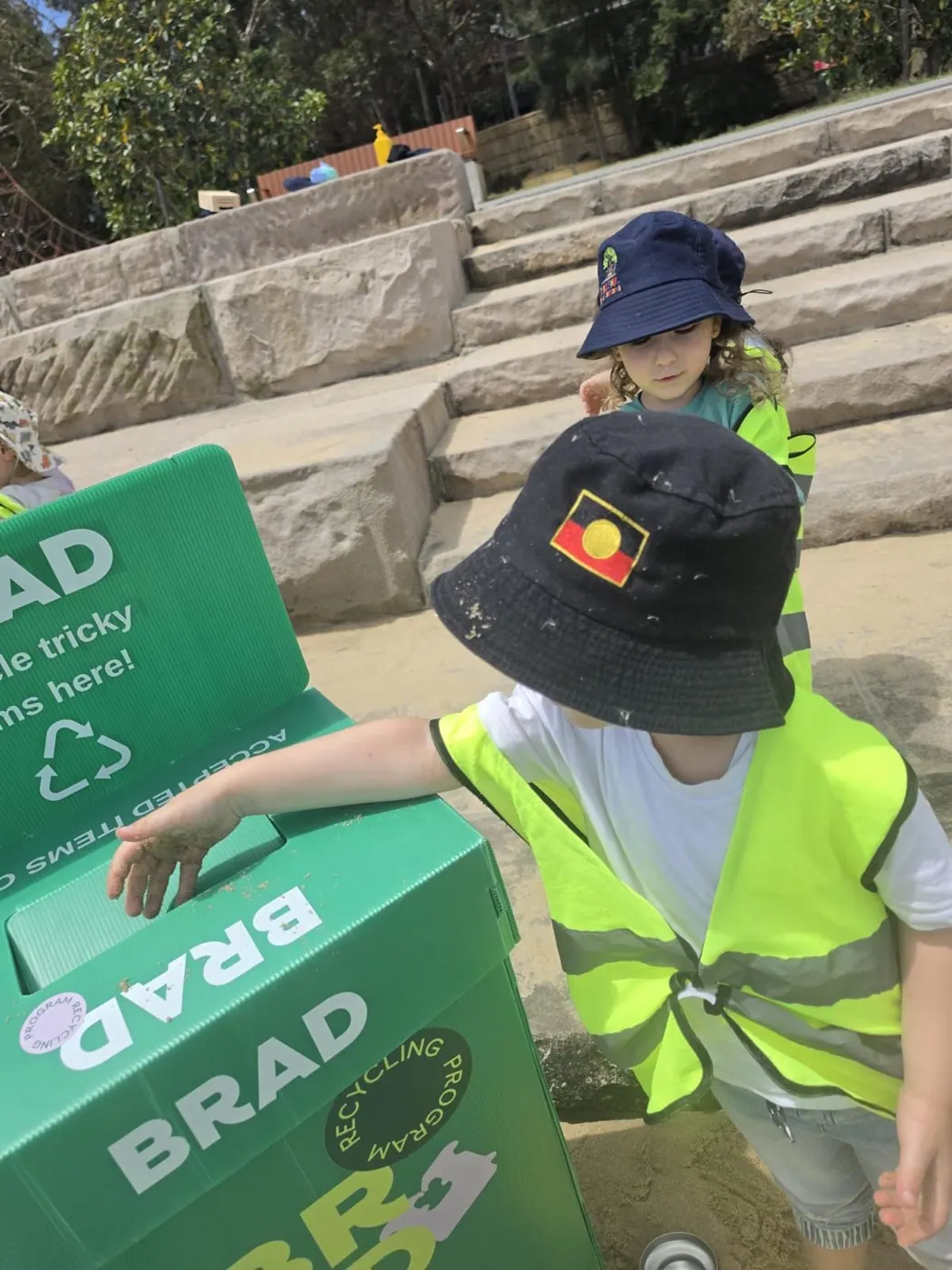
Time by the water helps children feel connected to the land and waterways around them. We share respect for Country, wonder about the creatures that live in and around the water, and talk about protecting the places we love. During our last visit, children were especially proud to help put items into the recycling drop-off box.
8. Water awareness from an early age
Beach Kindy is a gentle, real-life way to learn simple rules that matter: we only go near water with a grown-up, we stay where our educators can see us, and we listen when it is time to come out. Drowning remains a leading cause of accidental death for young Australian children, so water awareness is worth starting early, alongside close adult supervision.
How Beach Kindy links to the Early Years Learning Framework
Beach Kindy is planned learning, not just a day out. It connects to all five outcomes of the Early Years Learning Framework (EYLF V2.0):
- Identity: children feel capable and brave in a new place.
- Connection to their world: respect for the beach, the water and the creatures that live there.
- Wellbeing: fresh air, big movement and joyful outdoor play.
- Confident, involved learners: wondering, testing and discovering through hands-on play.
- Effective communicators: describing, questioning and telling stories about their discoveries.
Safety comes first
The beach is full of wonder, and we treat it with care:
- Every excursion is planned with a risk assessment, and families give written permission before excursions, as the National Regulations require.
- Children wear bright hi-vis vests so they are easy to see.
- Sun-safe hats and sunscreen every time.
- Children explore the shallow edge of the water with educators right beside them. Beach Kindy is paddling and play, not swimming.
Keep the learning going at home
You do not need a special program to enjoy the benefits of beach play as a family. A few ideas for your next visit:
- Follow their lead. Let your child decide what to explore and ask "What do you notice?" instead of explaining everything.
- Bring simple tools. A bucket, a spade and a cup are all children need for hours of experiments.
- Make a collection. Gather shells and pebbles, then sort them by size, colour or shape at home.
- Be sun smart. Slip on a shirt, slop on sunscreen, slap on a hat, seek shade and slide on sunglasses.
- Stay within arm's reach. Around any water, keep toddlers and young children within arm's reach of an adult at all times, even in very shallow water.
- Leave only footprints. Take your rubbish home and talk about why clean beaches matter.
See Beach Kindy for yourself
You can find out more on our Beach Kindy page and see more photos in the Beach Kindy album of our gallery. To see how outdoor learning fits into life at the Academy, book a tour or call us on 0434 715 270.
Helpful links
- ACECQA: approved learning frameworks (EYLF V2.0)
- Royal Life Saving Society Australia: Keep Watch
- Cancer Council NSW: sun safety
Questions parents ask
What is Beach Kindy?
Beach Kindy is a nature-based learning program where children spend time at the beach with their educators, paddling at the water's edge, playing in the sand, observing nature and learning to care for the environment.
What are the benefits of beach play for young children?
Beach play builds gross and fine motor skills, sensory processing, early science and maths thinking, vocabulary, confidence with manageable risk, social skills, care for the environment and early water awareness.
Is Beach Kindy safe for toddlers and preschoolers?
At Academy for Early Learners every excursion has a risk assessment and family permission, children wear hi-vis vests, hats and sunscreen, and they explore the shallows with educators right beside them. It is paddling and play, not swimming.
See it for yourself
Visit our West Pymble centre and meet the team.